


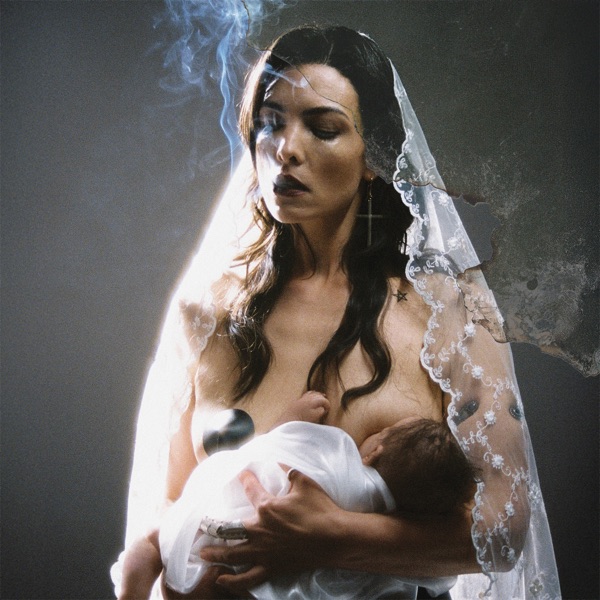
‘I tried to live a thousand lives,’ admits Caro in the opening lines of ‘Call The Shots’, one of many self-referential moments on ‘Returning To Innocence’. It’s true; the artist, full name Caroline van der Leeuw, rose to prominence in 2009 as the face and voice of Dutch jazz-pop collective Caro Emerald, with which she scored global hits like ‘Back It Up’, ‘A Night Like This’ and ‘Tangled Up’, topped the UK charts with their second album ‘The Shocking Miss Emerald’ and even beat Michael Jackson’s ‘Thriller’ for the longest-running No. 1 on the Dutch albums chart with 30 weeks at the top.
Two years after releasing their final single in 2020, she was revealed to be the voice behind anonymous new act The Jordan, ditching the vibrant sound and style of her previous work for a blend of trip-hop and folktronic textures that spoke to her versatility as an artist. If that reinvention was to distance herself from the past, Caro’s latest project sees her return to herself with a body of work that examines various aspects of her being – artist, daughter, mother – along with the nature of womanhood and the weight it carries.
From the onset she’s done with expectations. ‘Welcome to my farewell / Do you like the taste of ‘I told you so’?’ she sings on brooding opener ‘Already Lost’, letting go of the weight of the past and declaring: ‘Nakеd and free in the eye of the storm / Tell me I’ll be in control / I’ll sing my songs.’
Navigating a spectrum of alt-pop, with a focus on melody carried by stellar vocals and intricate, layered harmonies from a performer who has honed her craft over a twenty-year career, she explores themes of lust (‘The Guy Bangs’), ambition (‘Mama’), connection (‘The Only One’) and insecurity (‘Mirror’), through the nuanced lens of a 45-year-old mother-of-two who years to reconnect with the innocence of her younger self in a world that’s done its utmost to strip it away.
It’s Caro’s daughter who voices ‘Woman’, a 44-second spoken word interlude on societal expectations that leads into ‘Goddess’ – the centrepiece of ‘Returning To Innocence’ and a confessional that sees her list off her ‘sins’ – ambition, success, autonomy, vanity – while making peace with herself: ‘Now I’m going to hell, for enjoying myself / Father, please forgive me / Like I did.’
Much of the struggle comes from the conflict between Caro the artist and Caro the celebrity, as she candidly admits on lead single ‘I Can’t Win’: ‘The harder I try, the bigger it gets / When all that I want is for us to connect.’ It comes to a head on the aptly-titled ‘Superstar’, on which she tackles the scrutiny and judgement faced by those in the spotlight and insists: ‘I don’t mind if you don’t like me / This is who I am / I don’t want to be your superstar again.’
She may have happily turned a page on the past, but with ‘Returning To Innocence’ Caro delivers the strongest material of her career to date; a fully-realised body of work that speaks to her strengths as a songwriter, vocalist and creative, and further reinforces her place as one of the Netherlands’ most successful acts of our time.


