


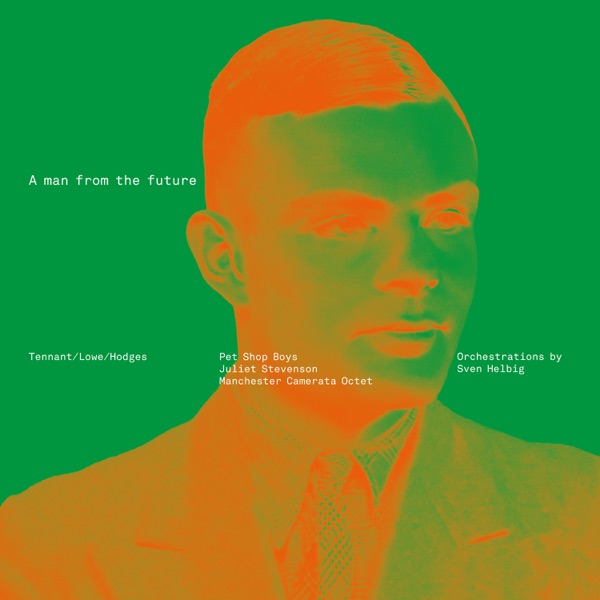
If any pop act is suited to putting the life, death and influence of pioneering mathematician and cryptanalyst Alan Turing to music, it’s Pet Shop Boys.
A collaboration with Turing biographer Andrew Hodges, the work was originally conceived around 2012/2013 and premiered during a performance with the BBC Concert Orchestra at London’s Royal Albert Hall in July 2014. Since then, its been reworked alongside original orchestrator Sven Helbig, with the resulting body of work a blend of masterful spoken word (courtesy of Juliet Stevenson) and Neil Tenant’s signature melodic narrative over Chris Lowe’s synths and strings that explores Turing’s life and legacy in chronology.
Opener ‘Natural Wonders Every Child Should Know’ establishes his character; set at a ‘moderately distinguished public school’, his independence is clear from the onset: ‘One could conform, rebel, or withdraw / And Alan withdrew.’ The realisation of his sexuality and experience of first love and loss in quick succession further pave the way for a man who worked outside of expectations, refusing to conform and carving his own pathway.
From his experience at Cambridge (‘He Dreamed of Machines’) to his contributions to cryptanalysis that helped the Allies of World War II (‘The Enigma’) and the development of computer science (‘Memory Control’), his greatness is juxtaposed with the tragedy that came of the affair that led to his conviction for gross indecency in 1952 (‘The Trial’) and his apparent suicide by cyanide (‘Only In His Death’).
It’s the nuances of the record that stand out, with the string arrangements and choral vocals on the record performed by Manchester-based musicians, nodding to Turing’s work at the University of Manchester, contributing to the development of early Manchester computers, in the city in which he was arrested and died.
Similarly, the details in the eponymous final track place his story within a greater context; that he was first charged on the day Queen Elizabeth II ascended to the throne and only pardoned by her 62 years later, in 2013, highlights sustained hostility towards homosexuality throughout the 20th century and beyond. Since the piece was first performed, the Alan Turing law has been made applicable to the hundreds of thousands of men who were prosecuted for homosexuality.
On paper, there’s something distinctly unconventional in Pet Shop Boys following up their highest-charting album in 30 years with concept piece of this nature, until the parallels between the duo and their subject matter are considered. Despite being one of Britain’s most-enduring and pioneering synth-pop and electronic acts, however, Tenant and Lowe faced scrutiny in relation to their sexuality over the years, so drawing parallels to Turing and honouring him with such an elaborate celebration makes for one of the boldest entries in their catalogue.


